Painting · Thanjavur, Tamil Nadu
Thanjavur (Tanjore) painting
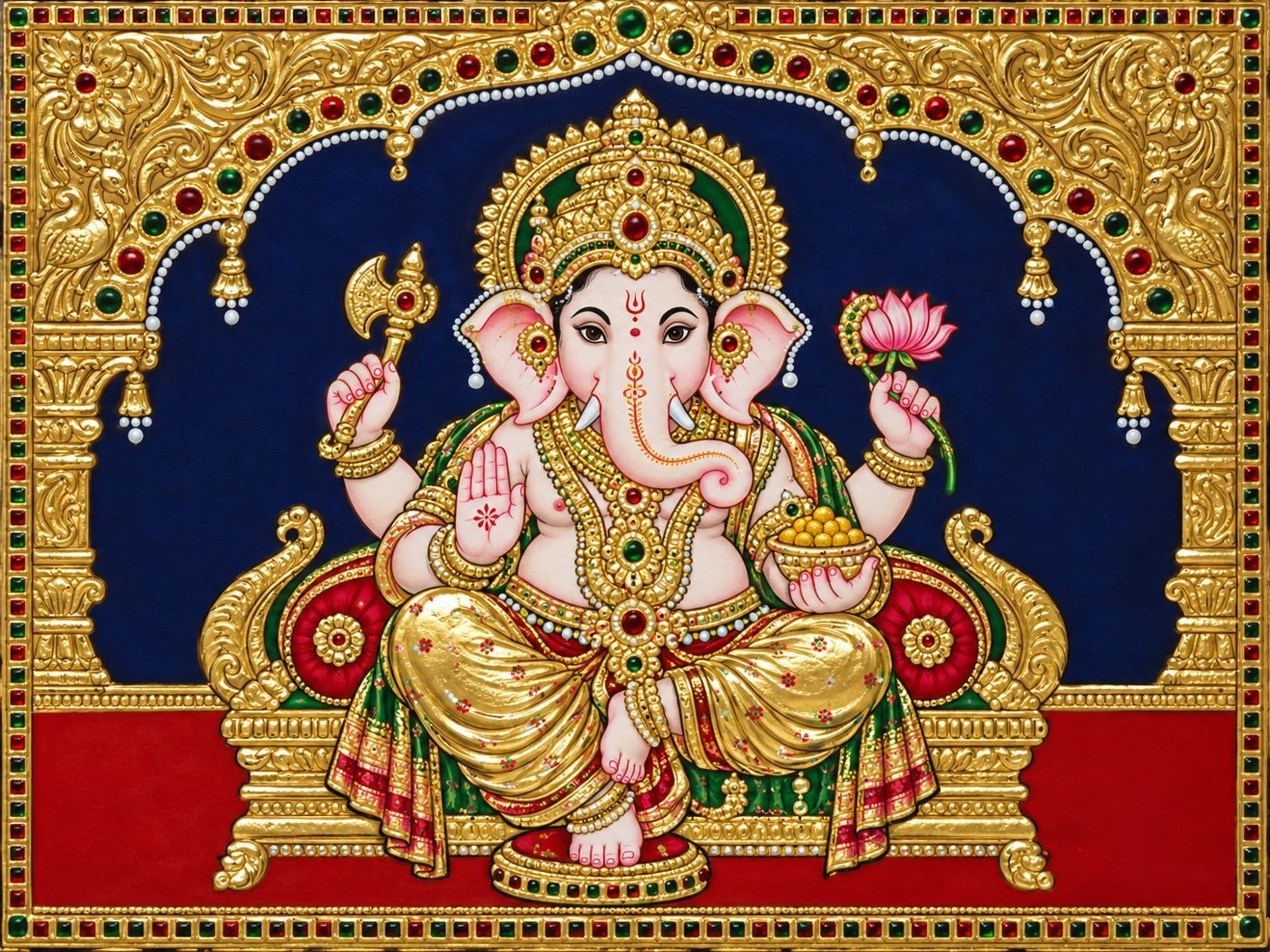
What is Thanjavur (Tanjore) painting?
Thanjavur painting is a South Indian panel painting known for gold leaf, raised gesso work and inset glass or stones. Panels show Hindu deities in a central frame. They are also called palagai padam, meaning wooden plank picture.
Who makes it, and where?
A 1906 gazetteer cited in the GI application credits the Razu caste of Tanjore. The present GI applicant is the Thanjavur Oviya Padugappu Sangam. The style later spread to other parts of Tamil Nadu and South India.
Age. Practised for several centuries in Thanjavur; a 1906 gazetteer is cited for its makers
How is it made?
Materials. Wooden board layered with paper and cotton cloth, coated with chalk or zinc oxide and gum paste. Raised work uses glue and limestone. Gold leaf, glass beads and gemstones are applied, with colours traditionally vegetable-based; chemical dyes are now also used.
The sequence
- Build a smooth base from board, paper and cloth
- Sketch the figure and set stones
- Build raised relief with paste
- Apply gold leaf over relief areas
- Paint figures, costumes and background
- Add border and frame under glass
What do you see in it?
- Main deity in a central arch or curtained frame
- Rounded bodies and almond-shaped eyes
- Smaller attendants arranged around the central figure
- Raised, gold-covered jewellery and costume
- Repeating borders or pattern backgrounds
What does it mean?
Sources describe the panels as mainly religious, showing gods, goddesses, saints and temple scenes, including episodes of Krishna's childhood. Their small size suited display for worship at home.
How is it practised today?
Production continues, with chemical dyes now used alongside traditional materials. Quality control is set out in the GI application by a body of experienced practitioners. Sources opened do not give market figures.
Protection. Geographical Indication granted for Thanjavur Paintings, Class 16, filed by Thanjavur Oviya Padugappu Sangam. A Lepakshi Handicrafts government page states recognition in 2007.
How can you learn from it with respect?
- Do not copy. Do not apply Thanjavur deity frames or gold relief styling as a generic luxury look. Do not label printed or imitation gold work as Thanjavur painting.
- Credit. Name Thanjavur and, where known, the studio or artist. Say clearly if your work is inspired by, and not made in, the tradition.
- Support the makers. Buy through GI-registered practitioners or government emporia such as Lepakshi, and ask about materials, as real gold leaf and imitation differ.
- The principle you can learn. Layered relief and metal catch light; a single focal figure within a frame creates strong hierarchy.
Sources
- Thanjavur paintings, GI application Geographical Indications Registry (via Origin GI)
- Tanjore paintings Lepakshi Handicrafts, Government of Andhra Pradesh