Body art · South Asia, the Arab states and North Africa
Mehndi / henna art
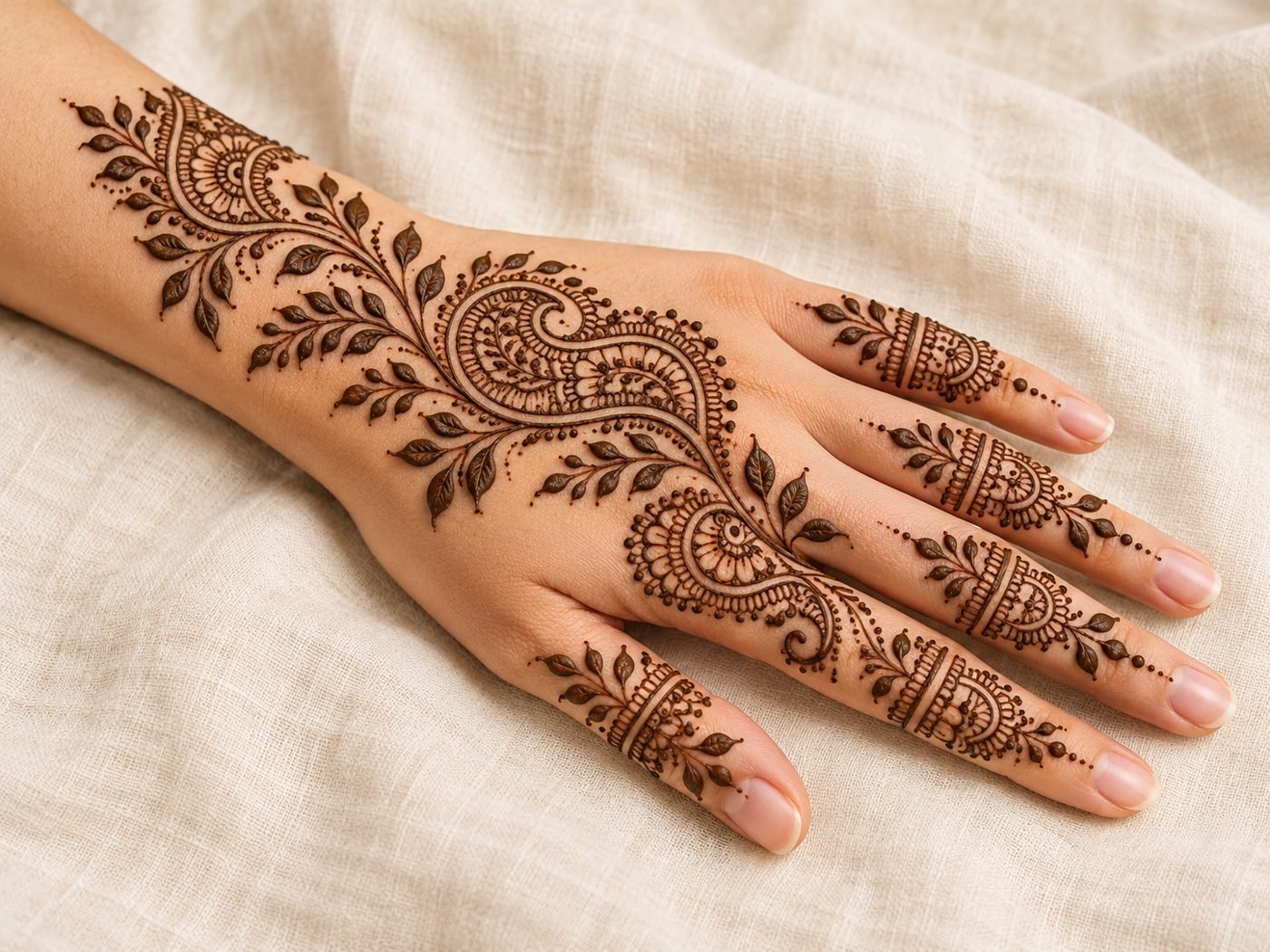
What is Mehndi / henna art?
Henna art is a paste made from dried henna leaves, applied to skin in patterns that stain for a few weeks. In India it is called mehndi and is linked to weddings and festivals. UNESCO also lists a shared henna element from sixteen Arab states.
Who makes it, and where?
UNESCO says women are the main users across the Arab states. In India, skilled artists, often women taught by their mothers, apply it at weddings and festivals. Rajasthan has a strong tradition, and Sojat in Pali district is known for henna. Designs differ by region.
Age. One government page says henna has been used in Pali, Rajasthan for centuries; no firm dates found
How is it made?
Materials. Leaves of the henna tree are harvested, dried, ground and mixed into a paste. The mix varies by country and purpose. Application tools are not described in the sources opened.
The sequence
- Harvest henna leaves, which UNESCO says happens twice a year.
- Dry the leaves.
- Grind the dried leaves into powder.
- Mix the powder into a paste.
- Apply the paste to skin in detailed patterns.
- Leave it to stain the skin for several weeks.
What do you see in it?
- Peacocks, lotuses and flowers
- Paisley or mango shapes and creeper vines
- Gods such as Krishna, Radha and Ganesha in some bridal work
- Linear Arabic-style designs with open spaces
- A simple large palm circle with capped fingertips in some south Indian work
What does it mean?
UNESCO calls henna a symbol of joy used in daily life and at births and weddings. In north Indian weddings it is part of bridal adornment, and a groom's name may be hidden in the design. Meanings vary by place and family.
How is it practised today?
Henna remains common for weddings and festivals in India, with parlours and professional artists widely available. A 2016 report said fresh paste is still prepared by hand in traditional Rajasthani families while machines harvest much commercial supply. UNESCO inscribed the Arab-state element in 2024.
Protection. UNESCO inscribed 'Henna: rituals, aesthetic and social practices' on the Representative List in 2024 for sixteen Arab states. India is not among them. An India government page labels Sojat mehndi with a GI tag but gives no registration details, so it is unconfirmed.
How can you learn from it with respect?
- Do not copy. Do not reproduce deity scenes or a specific bridal layout as a fashion print. Do not call all henna Indian or all henna Arabic, and do not imply a design belongs to a wedding tradition it has no link to.
- Credit. Say which region and community the style comes from, such as Rajasthani bridal mehndi or Gulf henna, and credit the artist who made or taught the design.
- Support the makers. Hire henna artists directly for events and pay for their time, since sources describe skilled application by hand as a trained, time-intensive practice.
- The principle you can learn. Dense ornament can still read clearly when it is built from a few repeated motifs and balanced against open space.
Sources
- Henna: rituals, aesthetic and social practices UNESCO Intangible Cultural Heritage
- DCT Abu Dhabi announces inscription of Henna on UNESCO Representative List Abu Dhabi Media Office
- Sojat Mehndi India.gov.in, One District One Product
- Henna in Indian weddings (travel feature) Smithsonian Magazine