Textile · Srikalahasti and Pedana (Machilipatnam), Andhra Pradesh
Kalamkari (Srikalahasti and Machilipatnam)
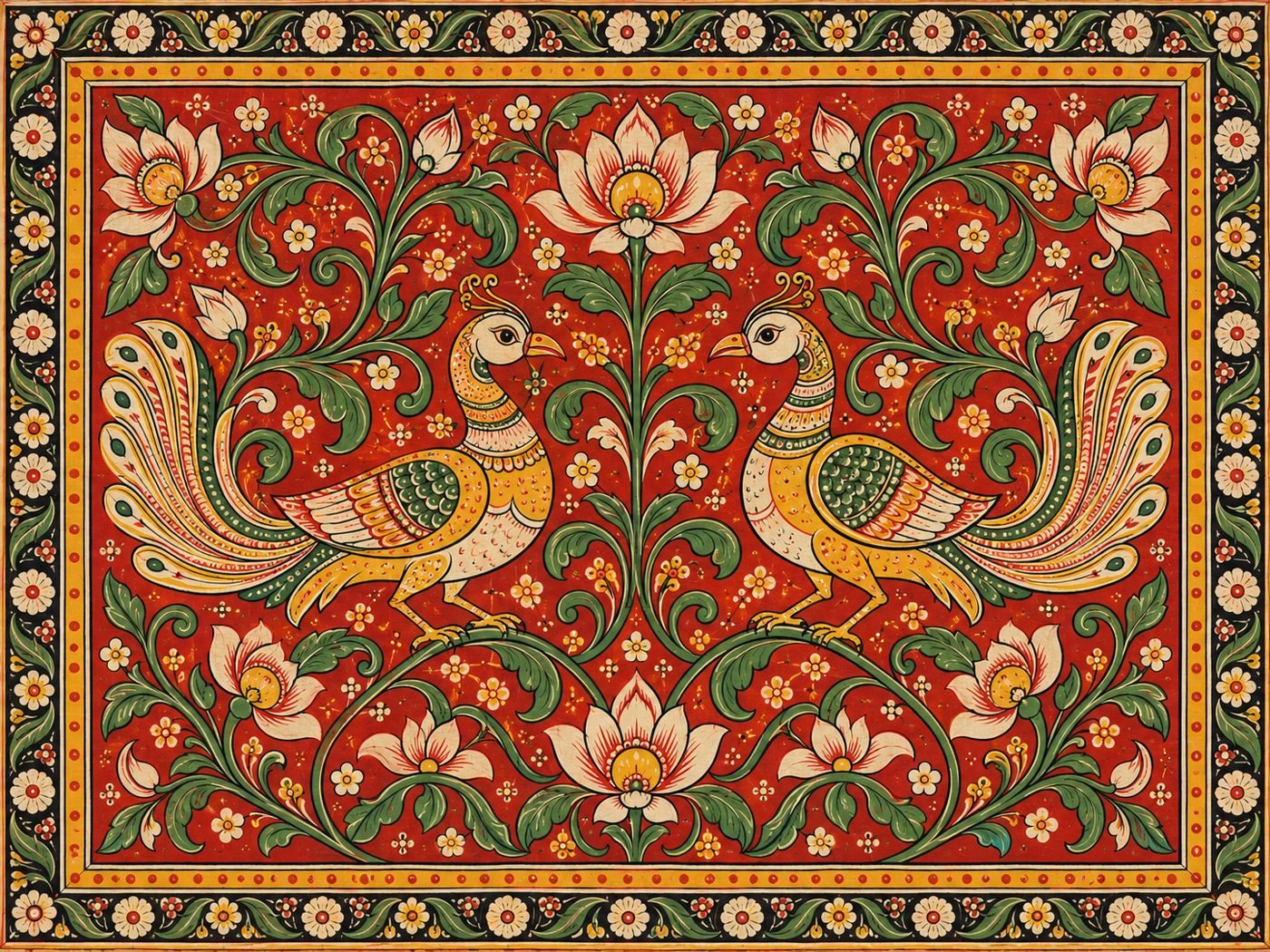
What is Kalamkari (Srikalahasti and Machilipatnam)?
Kalamkari is a natural-dye textile craft of Andhra Pradesh with two branches. At Srikalahasti, artists draw and fill the design freehand with a bamboo pen. At Machilipatnam, carved wooden blocks print the design. Both use mordants and plant dyes on cotton.
Who makes it, and where?
Srikalahasti work is done mainly in small family units in Srikalahasti, Chittoor district. The Machilipatnam branch is centred on Pedana, Krishna district, where a printers' association holds the registration. Sources do not agree on district naming for Srikalahasti, which one source places in Tirupati district.
Age. Srikalahasti was a pilgrimage centre before the 16th century and temple cloths were made there; the craft declined in the early 20th century
How is it made?
Materials. Cotton cloth, buffalo milk, myrobalan, alum, alizarin, indigo and iron-jaggery solution. Srikalahasti uses bamboo pens and a charcoal sketch from burnt tamarind twigs. Machilipatnam uses carved teakwood blocks.
The sequence
- Wash cotton, then soak in buffalo milk and myrobalan and dry it.
- Srikalahasti: sketch in charcoal, then outline with a bamboo pen and iron solution.
- Machilipatnam: stamp the design onto the cloth with carved wooden blocks instead.
- Srikalahasti: paint alum on red areas, then dye in hot alizarin.
- Wash, re-soak in milk, then add yellow, orange and blue by hand.
- Boil, wash and dry the cloth; correct flaws with a bamboo pen.
What do you see in it?
- Srikalahasti: figures and scenes from the Ramayana, Mahabharata and Puranas
- Tree of life and bird designs
- Machilipatnam: repeating floral trellises, vines and geometric borders
- Parrots, lotuses and cartwheels combined with Persian-style vines
- Earthy red, indigo blue, yellow and dark outlines from natural dyes
What does it mean?
Srikalahasti cloths were made mainly as canopies and hangings behind deity images at the Srikalahastisvara temple, so religious narrative is central there. Machilipatnam work leans toward repeat pattern and is used for furnishings and clothing. Sources do not give a single symbolic reading for the whole craft.
How is it practised today?
Both branches continue. Products now include saris, bed linen, curtains, upholstery, bags and wall hangings, sold in India and abroad. Srikalahasti work declined in the early 20th century, and one source says by the 1950s only one painter from the Balija community still practised it there.
Protection. Both branches hold separate Geographical Indication registrations in Andhra Pradesh: Srikalahasthi Kalamkari (application 28, certificate dated 12 January 2006) and Machilipatnam Kalamkari (application 90, certificate dated 10 July 2008).
How can you learn from it with respect?
- Do not copy. Do not print temple narrative scenes or deity figures as casual decoration. Do not label machine-printed or digitally printed cloth as Kalamkari, and do not blur the pen-drawn and block-printed branches into one style.
- Credit. Name the branch (Srikalahasti or Machilipatnam), the state, and the workshop or artisan group where known. Say whether the work is hand-drawn, block-printed or only inspired by the tradition.
- Support the makers. Buy or commission directly from registered artisan groups or cooperatives, pay for the labour of the process, and check Geographical Indication authorisation. Sources note that middlemen take a large share of income in related crafts.
- The principle you can learn. Layered process shapes the result: mordant, resist and dye baths decide colour before any detail is added, so plan a design around the order of operations.
Sources
- Kalamkari: An Introduction Sahapedia
- Machilipatnam Kalamkari Development Commissioner (Handicrafts), Ministry of Textiles
- The Age-old Artwork of Srikalahasti Lepakshi Handicrafts, Government of Andhra Pradesh
- Srikalahasthi Kalamkari, GI application 28 Geographical Indications Registry, India
- Machilipatnam Kalamkari, GI application 90 Geographical Indications Registry, India
Open Kalamkari (Srikalahasti and Machilipatnam) in the interactive guide